Guide to Fire Safety Regulations for Landlords
Fire safety for landlords goes beyond ticking legal boxes. It’s about protecting the people who live in your property and safeguarding the investment you’ve worked hard to build. Whether you let a single house or a portfolio of properties, landlord fire safety should be a consistent priority. Staying on top of fire safety regulations for landlords is an ongoing commitment, not a one-off task.
What Are the Fire Safety Regulations for Landlords
Your fire safety responsibilities as a landlord are set out across several pieces of legislation. Here are the key ones to know.
The Smoke and Carbon Monoxide Alarm (Amendment) Regulations 2022
The Smoke and Carbon Monoxide Alarm (Amendment) Regulations 2022 came into force on 1 October 2022, extending requirements to both private and social landlords. Under these regulations, landlords must:
- Install at least one smoke alarm on every storey used for living accommodation.
- Install a carbon monoxide alarm in any room with a fixed combustion appliance, excluding gas cookers. This now includes rooms with gas boilers.
- Check that all alarms are present and in working order at the start of every new tenancy.
- Repair or replace any alarm as soon as reasonably practicable after being informed that it may be faulty.
Since October 2022, the responsibility for repairing or replacing faulty alarms has sat firmly with the landlord.
The Housing Act 2004 and the HHSRS
The Housing Act 2004 introduced the Housing Health and Safety Rating System (HHSRS), a risk-based method local authorities use to assess hazards in residential properties, with fire listed as a key category. Under the HHSRS, local authorities can inspect rental properties and take enforcement action if they identify fire hazards. The Act also requires that tenants can escape safely in the event of a fire, and that landlords make repairs to the property’s structure using fire-resistant materials where possible, to help prevent fire from spreading between rooms.
The Fire Safety (England) Regulations 2022
From 23 January 2023, the Fire Safety (England) Regulations 2022 introduced a requirement for the responsible person to carry out annual checks on flat entrance doors and quarterly checks of all fire doors in communal areas in residential buildings more than 11 metres in height.
The Furniture and Furnishings (Fire Safety) Regulations
Any furniture and furnishings provided as part of a furnished let, for example, sofas, sofa beds, mattresses, cushions, and headboards, must meet the fire safety standards set out in the Furniture and Furnishings (Fire Safety) Regulations. Items that comply should carry a permanent label confirming this.
Landlords’ Fire Safety Responsibilities
Here’s a breakdown of your key fire safety responsibilities as a landlord and what fire safety for landlords involves in practice.
Smoke and Carbon Monoxide Alarms
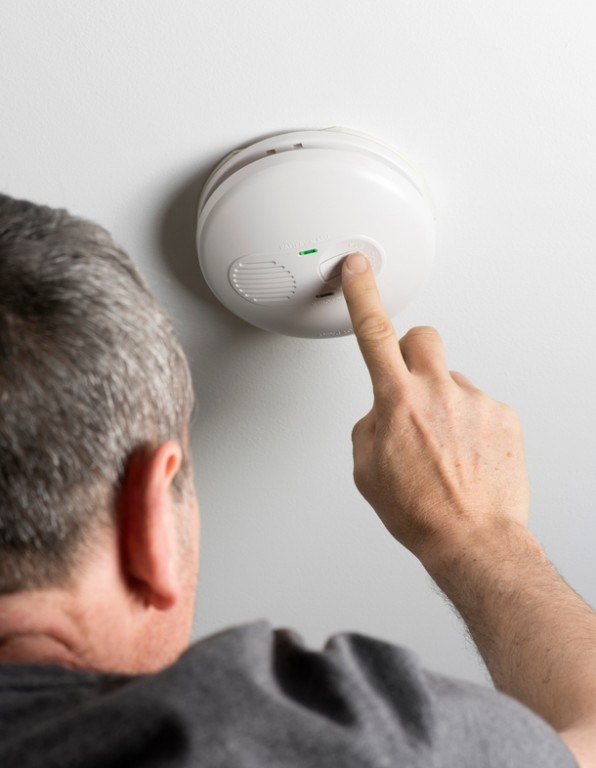
You must install working smoke alarms on every floor and carbon monoxide alarms in rooms with a fixed combustion appliance, excluding gas cookers. Alarms should be tested at the start of every tenancy, and you’re responsible for repairs or replacements if a tenant reports a fault. Keeping a record of testing is good practice.
Escape Routes
Landlords are legally responsible for making sure tenants have access to a safe, clear escape route at all times. Escape routes may be internal, such as stairways and corridors, or external, such as fire escapes. Hallways, communal stairwells, and exits should never be blocked. HMOs are subject to stricter rules on escape routes due to the higher number of occupants.
Fire-Safe Furniture and Furnishings
If your property is let furnished, check for a fire safety label before providing any upholstered item as part of a tenancy and replace any items that might not meet the current standards.
Fire Extinguishers
Fire extinguishers may be required depending on the type of HMO, with larger ones typically requiring them by law, and local authority licensing requirements. For other rental properties, they’re not obligatory, though rules can vary by local authority, so it may be worth checking.
Fire Risk Assessment
A fire risk assessment is a legal requirement for rented properties, including HMOs. There is no single fire safety certificate covering all rental properties in England, but you should have a current assessment in place. HMO landlords must also hold a valid licence that includes meeting fire safety standards.
The assessment should identify hazards, consider who is at risk, and set out steps to reduce that risk. For single lets, a competent landlord may carry out their own assessment. For complex properties, it may be worth seeking the help of a qualified professional.
A landlord fire safety checklist kept alongside your fire risk assessment gives you a clear record of what has been checked and when.
Why Is Landlord Fire Safety Important?
Understanding your fire safety responsibilities can help you protect both your tenants and your property.
Tenant Safety
Failing to meet your fire safety obligations puts the people living in your property at real risk. People in rented or shared accommodation are statistically more likely to experience a fire, which is why landlord fire safety must be taken seriously.
Fire can cause significant structural damage to a property. Maintaining good landlord fire safety practices and having suitable landlord insurance in place can help provide a financial safety net if damage does occur.
Prosecution And Fines
Non-compliance with fire safety regulations for landlords and your fire safety responsibilities is treated seriously. Local authorities can issue enforcement notices, impose fines, and, in serious cases, pursue criminal prosecution. Penalties can run into tens of thousands of pounds, and in cases involving significant harm, landlords may face criminal charges.
Data available from the latest Home Office Fire Statistics in England analysed various property types that have had a formal inspection conducted by local fire and rescue services in order to verify that the fire safety legislations are being followed.
| Property Type | Unsatisfactory Audit Rate | Total Formal Noticed Served |
| Houses converted to flats | 59% | 131 |
| HMOs | 55% | 122 |
| Purpose built flats (4-5 storeys) | 46% | 138 |
| Purpose built flats (10+ storeys) | 34% | 78 |
You can find more data on the analysis of fire safety audits, outcomes (satisfactory vs. unsatisfactory), and enforcement actions (formal/informal notices and prosecutions) in this spreadsheet.
Cost of Fire Damage
Repairing fire damage can be costly, particularly if it spreads to structural elements. This is one reason many landlords consider landlord buildings insurance, which can provide cover for damage to the structure of the property.
Common Causes of Fires in Rented Properties
Understanding how fires start is part of the bigger picture of fire safety for landlords, helping you and your tenants take practical steps to reduce risk. Some of the most common causes include:
- Kitchen appliances: Cooktops and deep fat fryers are among the leading causes of residential fires.
- Electrical faults and overloaded sockets: A common hazard, particularly in older properties. Regular gas and electrical checks can help identify risks early.
- Smoking and open flames: Cigarettes and candles both pose a fire risk. A no-smoking policy in the tenancy agreement may help.
- Heating appliances: Electric heaters and faulty gas appliances can cause fires, especially during colder months when they’re used more.
- Seasonal hazards: Fairy lights, overloaded sockets, and festive decorations can increase fire risk at times like Christmas.
Fire Safety Requirements for HMO
Fire safety regulations for landlords of houses of multiple occupation (HMO) are stricter than for standard rental properties. HMOs are measured by strict fire safety regulations that landlords must abide by, as they carry a higher risk of fire due to the number of occupants. Under HMO licensing conditions, landlords must typically provide:
- Fire doors that meet the required standard throughout the property.
- Clearly marked and unobstructed escape routes.
- Fire extinguishers and fire blankets in suitable locations, such as kitchens.
- Interconnected smoke alarms throughout.
- A fire risk assessment is carried out by a competent person.
If a landlord or their agent fails to meet HMO fire safety requirements and a fire occurs, they may face legal action. Requirements can vary by the size of the HMO and local authorities, so it’s worth checking with your local council. Find out more about our HMO insurance options.
Reduce the Risks of Fire in Rental Properties
Whilst you can’t prevent every fire, practical steps can significantly reduce the risk. Sharing fire safety advice with tenants at the start of a tenancy gives them a clear reference point and can help reduce the risk of avoidable incidents.
- Meet all legal requirements: Comply with all fire safety regulations for landlords, including alarm installation, escape routes, and fire risk assessments.
- Consider a no-smoking policy: This in your tenancy agreement may reduce smoking-related fire risk and support your landlord insurance position.
- Arrange regular gas and electrical checks: You can read more about your gas safety obligations in our dedicated guide.
- Share fire safety advice with tenants: Clear information can reduce risk and may help protect you from liability.
- Review your fire risk assessment regularly: Update it before each new tenancy and whenever there are changes to the property.
A landlord fire safety checklist before each tenancy helps make sure nothing is missed.
Taking these steps helps to show that you take fire safety regulations for landlords seriously, which may also support your position in the event of an insurance claim or legal dispute.
What Fire Safety Advice Should Landlords Give Their Tenants?
When a new tenant moves in, consider providing written fire safety advice. Good fire safety advice for landlords to share includes:
- How to check smoke alarms and carbon monoxide alarms are working, and how to report a fault.
- Never smoking inside.
- How to keep hallways, stairways, and exit routes clear at all times.
- Why plug sockets should not be overloaded, and what to do if an appliance seems faulty.
- Safe use of all appliances provided, including heating equipment, for example, not drying clothes on electric heaters.
- The location of the fire escape route and how to use it.
- The importance of keeping fire doors closed, where fitted.
- What to do if a fire breaks out, including leaving the building immediately and calling 999.
- Where door and window keys are kept for emergency access.
- The landlord’s contact details for any safety concerns about gas or electrical appliances.
The London Fire Brigade has useful resources for both landlords and tenants, including a fire safety checklist that can be shared with tenants at the start of a tenancy.
Why Choose Just Landlords?
Meeting fire safety regulations for landlords is one part of the picture. Taking fire safety for landlords seriously also means having suitable insurance in place, helping to give you peace of mind. Here’s why so many landlords choose Just Landlords:
- Rated Great on Trustpilot*, with over 1,000 reviews.
- Over 25 years of experience providing residential landlord insurance.
- An in-house customer service and claims team based in Nottingham.
- Friendly support is available by phone, LiveChat, or email.
*Correct as of June 2026
Contact Just Landlords by calling us on 0808 168 9220, or clicking here to access our LiveChat and email.
FAQ
Please note that these frequently asked questions are not a substitute for the policy wording. For full terms and conditions, please see the policy documentation.
Do landlords need to provide fire extinguishers?
Fire extinguishers are a legal requirement in larger HMOs, where they must meet current British Safety Standards (BS EN3). For standard rental properties, they’re not legally required, though local authority requirements vary. It’s worth checking with your local council.
What fire safety equipment does a landlord need to provide?
At a minimum, landlords must provide a working smoke alarm on every floor used as living accommodation and a carbon monoxide alarm in any room with a fixed combustion appliance, excluding gas cookers. A carbon monoxide alarm is also required in rooms with a gas boiler. In HMOs, landlords may also need to provide fire extinguishers, fire blankets, and fire doors. If you’re unsure whether your property requires a fire safety certificate, your local fire authority can advise.
What is required for tall multi-occupancy residential buildings?
For residential buildings over 11 metres in height, the Fire Safety (England) Regulations 2022 require annual inspections of flat entrance doors and quarterly checks of all fire doors in communal areas. Buildings over 18 metres or seven storeys under the Building Safety Act have further obligations, including registration with the Building Safety Regulator.
What do landlords need to maintain?
Landlord fire safety maintenance covers smoke alarms, carbon monoxide alarms, gas and electrical appliances, and any furniture and furnishings provided. Gas appliances must be checked annually by a Gas Safe registered engineer. Any faulty alarms should be repaired or replaced promptly once reported. Keeping a fire safety checklist updated after each inspection helps demonstrate ongoing compliance.
What happens if a landlord is not compliant with fire safety in a rented property?
Understanding your fire safety responsibilities is essential. Failing to meet them under fire safety regulations for landlords may result in enforcement notices, financial penalties, and, in serious cases, criminal prosecution. It’s important to seek specialist legal or professional advice if you’re unsure whether your property meets current requirements.
The sole purpose of this article is to provide guidance on the issues covered. This article is not intended to give legal advice, and, accordingly, it should not be relied upon. It should not be regarded as a comprehensive statement of the law and/or market practice in this area. We make no claims as to the completeness or accuracy of the information contained herein or in the links which were live at the date of publication. You should not act upon (or should refrain from acting upon) information in this publication without first seeking specific legal and/or specialist advice. Arthur J. Gallagher Insurance Brokers Limited trading as Just Landlords accepts no liability for any inaccuracy, omission or mistake in this publication, nor will we be responsible for any loss which may be suffered as a result of any person relying on the information contained herein.