Landlord Carbon Monoxide Alarm Guide
As a landlord, you have a legal duty to keep your tenants safe. This guide covers everything you should know about carbon monoxide alarms, from what the regulations require to your ongoing responsibilities.
In this guide, we cover:
- What a carbon monoxide alarm is.
- Landlord carbon monoxide alarm requirements.
- Landlord carbon monoxide alarm responsibilities.
- What tenants are responsible for.
- What type of carbon monoxide alarms are required.
- Consequences for non-compliance.
- How landlords can prove they’ve tested alarms.
- Whether carbon monoxide alarms are needed in rooms with gas or oil appliances.
- What to do if a tenant doesn’t allow access.
What is a carbon monoxide alarm?
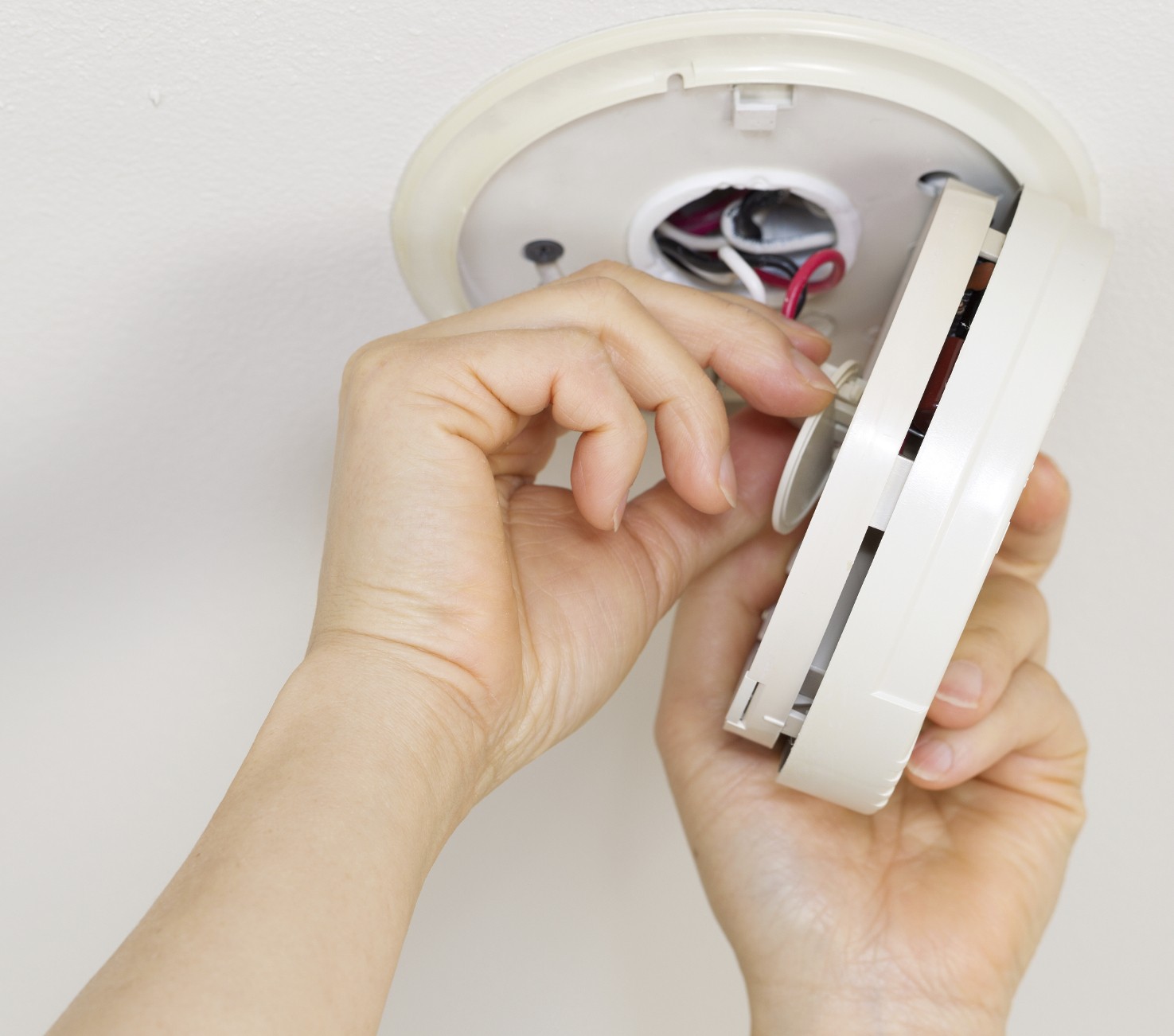
A carbon monoxide (CO) alarm is a safety device that detects the presence of carbon monoxide gas in a property. Because CO is colourless and odourless, tenants have no way of knowing it’s in the air without one. That’s what makes these alarms so important. Without one, a dangerous leak could go undetected until it causes serious harm.
Landlord carbon monoxide alarm requirements
The Smoke and Carbon Monoxide Alarm (Amendment) Regulations 2022 came into force on 1 October 2022. Under these regulations, all relevant landlords must:
- Have at least one smoke alarm on each storey of their property where there is a room used as living accommodation. This has been a legal requirement in the private rented sector since 2015.
- Have a carbon monoxide alarm in any room used as living accommodation that contains a fixed combustion appliance (excluding gas cookers).
- Garages, outbuildings, driveways, patios, fences, walls, gates, hedges
- Repair or replace smoke alarms and carbon monoxide alarms once notified that they are faulty.
One of the most significant changes brought in by the 2022 regulations concerns ongoing maintenance. Previously, tenants were often considered responsible for alarm upkeep during the tenancy. Under the current rules, the landlord is responsible for repairing or replacing alarms once notified of a fault. Prompt action is required to stay compliant.
These requirements are enforced by local housing authorities, who can impose fines of up to £5,000 where a landlord fails to comply with a remedial notice.
For more information on gas safety, read our guide.
Landlord carbon monoxide alarm responsibilities
Install alarms
- Fit a carbon monoxide alarm in every room used as living accommodation that contains a fixed combustion appliance.
- Provide a smoke alarm on each floor of the property.
- Check that alarms meet the British Standard BS 50291-1.
Maintain alarms
- Book annual services for all fuel-burning appliances, such as boilers and water heaters.
- Repair or replace any faulty carbon monoxide alarms once notified by a tenant.
- Keep tenants informed if you need access to the property to replace or repair an alarm.
Comply with laws
- Stay up to date with the relevant regulations and take action when needed.
- Keep records of all alarm installations, tests, and any repairs carried out.
Educate your tenants
You can help your tenants stay informed on carbon monoxide safety by sharing guidance at the start of the tenancy. This could include:
- What action to take if an alarm sounds.
- How to notify you if an alarm stops working.
What is the tenant responsible for?
While the landlord holds the main legal responsibilities, tenants also have a role to play. They’re expected to:
- Report any faults with carbon monoxide alarms to their landlord as soon as possible.
- Test the alarms regularly (ideally once a month) during the tenancy.
- Replace the batteries if they are comfortable doing so, or notify the landlord immediately if a low-battery chirp indicates a fault that needs addressing.
What type of carbon monoxide alarms are required?
The regulations don’t specify whether alarms should be mains-powered (hard-wired) or battery-powered. Landlords can choose the type that suits their property and tenants best, provided the alarms meet the relevant British Standards.
All devices must comply with the following:
- Smoke alarms: Must comply with British Standard BS 5839-6.
- Carbon monoxide alarms: Must comply with British Standard BS 50291.
Where battery-powered alarms are used, those with sealed-for-life batteries are generally considered a better option than those with replaceable batteries.
Consequences for non-compliant carbon monoxide alarms
Enforcement of these regulations sits with local housing authorities. If a landlord is found to be in breach, the authority will typically issue a remedial notice, giving the landlord 28 days to address the issue.
Failing to comply with a remedial notice is a serious matter. Consequences may include:
- Fines of up to £5,000 per breach, which can be applied per property.
- Evidence of poor property safety records, including alarm non-compliance, can be used against a landlord during a Section 8 possession claim or in a tenant’s defence against one, even though the alarm regulations themselves do not directly restrict a landlord’s ability to seek possession.
For landlords with a portfolio of properties, non-compliance across multiple properties could lead to high costs. Keeping detailed records of all alarm installations and tests is the most practical way to demonstrate compliance.
Note: Section 21 ‘no-fault’ evictions were abolished from 1 May 2026 under the Renters’ Rights Act. Section 8 is now the only route to possession for all landlords, not just those who are non-compliant.
How can landlords prove that they’ve tested alarms at the start of a tenancy?
One of the most effective ways to prove compliance is to include the testing of all alarms in the property inventory at the start of the tenancy. When the tenant signs the inventory, they confirm that the alarms were tested and in working order.
Beyond that, landlords should keep a running record of when alarms are tested, repaired, or replaced. The local housing authority has the final say on whether the evidence provided demonstrates that a landlord has met the requirements of the regulations.
Are carbon monoxide alarms needed in rooms with gas or oil appliances?
Yes, absolutely. Under the Smoke and Carbon Monoxide Alarm (Amendment) Regulations 2022, carbon monoxide alarms are legally required in any room used as living accommodation that contains a fixed combustion appliance. This mandatory requirement applies to gas boilers, combi boilers, gas fires, and oil-fired heating systems, alongside traditional solid-fuel appliances like wood-burning stoves or open fireplaces.
The only exception under these specific regulations is a gas cooker (such as a standard kitchen hob or oven). However, please note that if your kitchen contains both a gas cooker and a gas boiler, a carbon monoxide alarm is still legally required in that room because of the boiler.
What if the tenant doesn’t allow access to the property?
If a tenant is refusing access to install a carbon monoxide alarm, it’s worth writing to them to explain that it’s a legal requirement and, importantly, that it’s there for their own safety.
If the local authority has reasonable grounds to believe you haven’t complied with the regulations, a remedial notice will be served detailing the suspected breach and the action required.
Landlords who can show they’ve taken all reasonable steps to comply, including attempting to contact the tenant, may be exempt from the civil penalty. The local authority will assess the evidence and make a decision.
Including the testing of all alarms in a signed inventory at the start of the tenancy is a useful way to protect yourself and confirm that requirements were met from day one.
Why choose Just Landlords
Choosing a specialist insurance provider is an important part of protecting your property and helping to give you peace of mind as a landlord. Here’s why many landlords choose Just Landlords:
- Rated Great on Trustpilot*, with over 1,000 reviews.
- Over 25 years of experience providing residential landlord insurance.
- An in-house customer service and claims team based in Nottingham.
- Friendly support is available by phone, LiveChat, or email.
*Correct as of June 2026
Find out more about our landlord insurance options.
FAQ
Below are some frequently asked questions about carbon monoxide alarms for landlords.
Please note that these frequently asked questions are not a substitute for the policy wording. For full terms and conditions, please see the policy documentation.
Where do carbon monoxide alarms need to be located?
Carbon monoxide alarms should be installed in every room that is used as living accommodation and that contains a fixed combustion appliance, excluding gas cookers. This is a legal requirement under the Smoke and Carbon Monoxide Alarm (Amendment) Regulations 2022.
What should tenants do if their carbon monoxide alarm isn’t working?
If a tenant finds that their alarm isn’t working, they should check whether it needs new batteries and get in touch with their landlord as soon as possible. Under current regulations, it’s the landlord’s responsibility to repair or replace faulty alarms once they’ve been notified.
Do the regulations apply to HMOs?
Yes. HMOs must comply with carbon monoxide alarm requirements.
For licensed HMOs, carbon monoxide alarm requirements are included as mandatory conditions of the HMO licence under the Housing Act 2004. The licence holder must ensure that a carbon monoxide alarm is installed in any room used wholly or partly as living accommodation that contains a fixed combustion appliance (excluding gas cookers), and that the alarm is kept in proper working order.
For other rented properties, including unlicensed HMOs where applicable, the Smoke and Carbon Monoxide Alarm (Amendment) Regulations 2022 require landlords to install a carbon monoxide alarm in any room used as living accommodation that contains a fixed combustion appliance (excluding gas cookers).
In all cases, landlords are responsible for ensuring the required alarms are installed and for repairing or replacing faulty alarms once they have been notified of a problem.
Are carbon monoxide alarms a legal requirement?
Yes, carbon monoxide alarms are a legal requirement for landlords in England. Under the Smoke and Carbon Monoxide Alarm (Amendment) Regulations 2022, alarms must be fitted in any room used as living accommodation that contains a fixed combustion appliance (excluding gas cookers).
The sole purpose of this article is to provide guidance on the issues covered. This article is not intended to give legal advice, and, accordingly, it should not be relied upon. It should not be regarded as a comprehensive statement of the law and/or market practice in this area. We make no claims as to the completeness or accuracy of the information contained herein or in the links which were live at the date of publication. You should not act upon (or should refrain from acting upon) information in this publication without first seeking specific legal and/or specialist advice. Arthur J. Gallagher Insurance Brokers Limited trading as Just Landlords accepts no liability for any inaccuracy, omission or mistake in this publication, nor will we be responsible for any loss which may be suffered as a result of any person relying on the information contained herein.