
How prepared are landlords for the government’s 2030 energy standards?

As part of the government’s Warm Homes Plan, all privately rented properties must have an Energy Performance Certificate (EPC) rating of C or higher by 2030. But how achievable is this target and what impact will it have on landlords?
We analysed data for over 340 local authorities across England and Wales, looking at the current and potential average EPC ratings, as well as the estimated cost of bringing non-compliant properties up to target. We also looked at the average earning potential for properties in each location, to calculate a ‘repair-to-rent’ ratio, allowing us to see how long it will take landlords to fund essential retrofit works.
Landlords face a £25.8bn retrofit bill ahead of the 2030 deadline
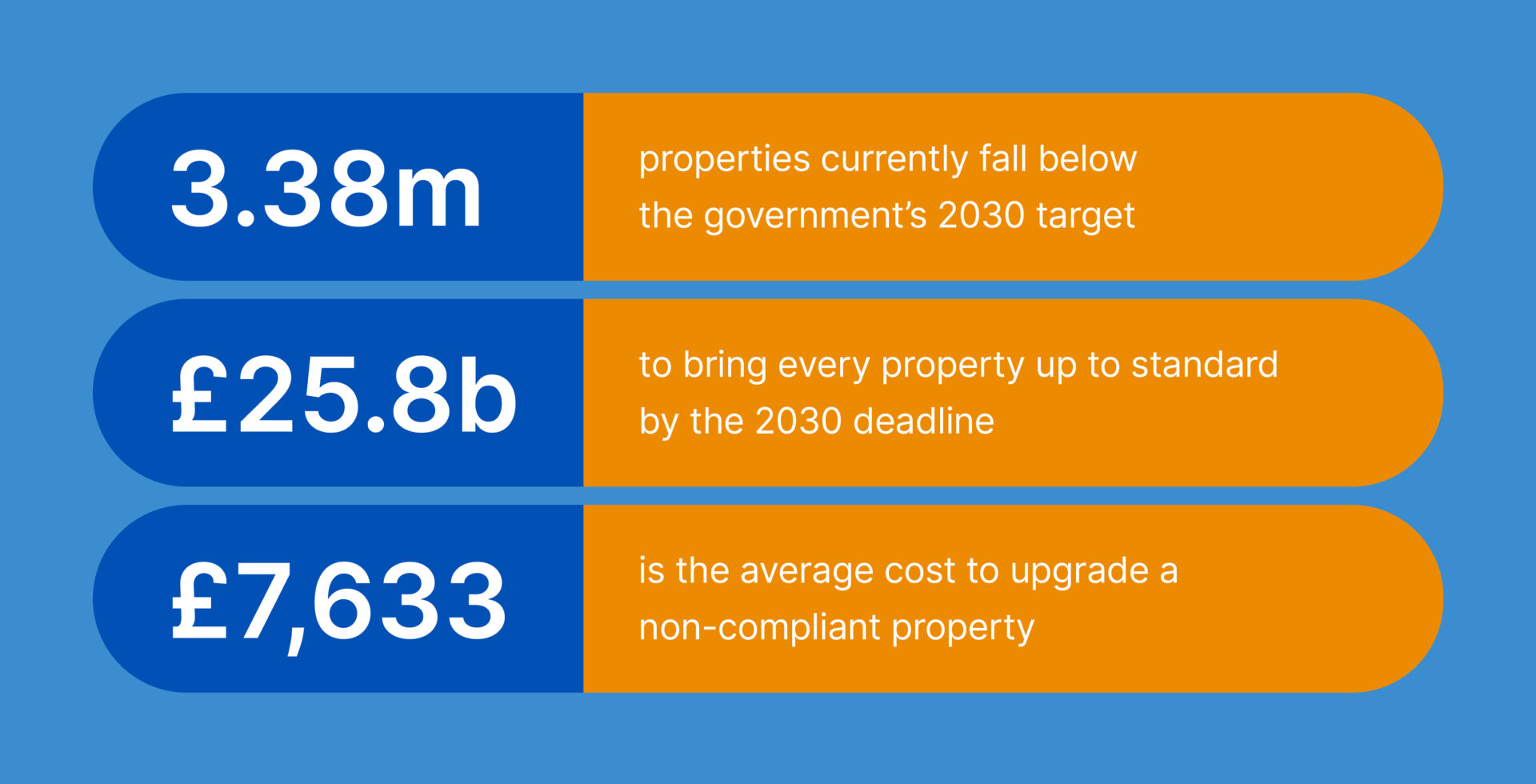
Nearly 3.38 million properties currently fall below the government’s 2030 target, with EPC ratings of D or lower – 66% of the current private rental stock.
To bring every property up to standard by the 2030 deadline would cost an estimated £25.8 billion. The average cost to upgrade a non-compliant property is £7,633, but this figure varies considerably, with some regions facing costs as high as £12,000.
When taking average rental yields into account, the regional differences become even starker, with some areas facing upgrade costs equivalent to almost 150% of their total annual income, while others can cover retrofit costs in just a few weeks.
Retrofit Costs: Rural vs Urban and the North-South divide
When it comes to retrofit costs, rural and northern regions face substantially higher costs, due to higher non-compliance rates and lower average rents.
In Powys, where 83% of properties are currently non-compliant, the average bill to reach Band C is £10,759. With average annual rents in the area at just £7,248, landlords face an upgrade cost equivalent to 148% of their total annual income.
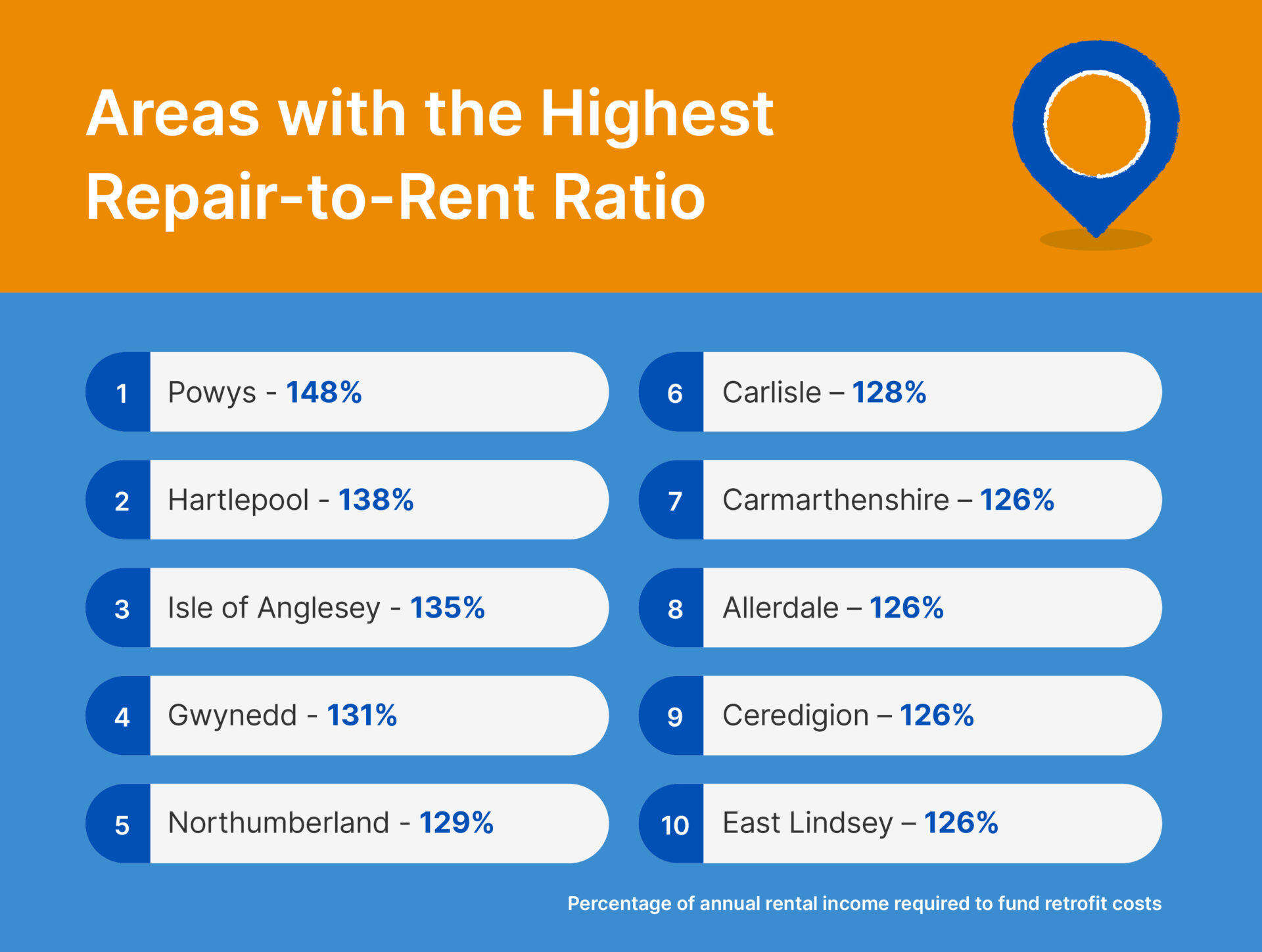
In a stark contrast, landlords across London can cover retrofit costs with a much smaller proportion of their rental income.
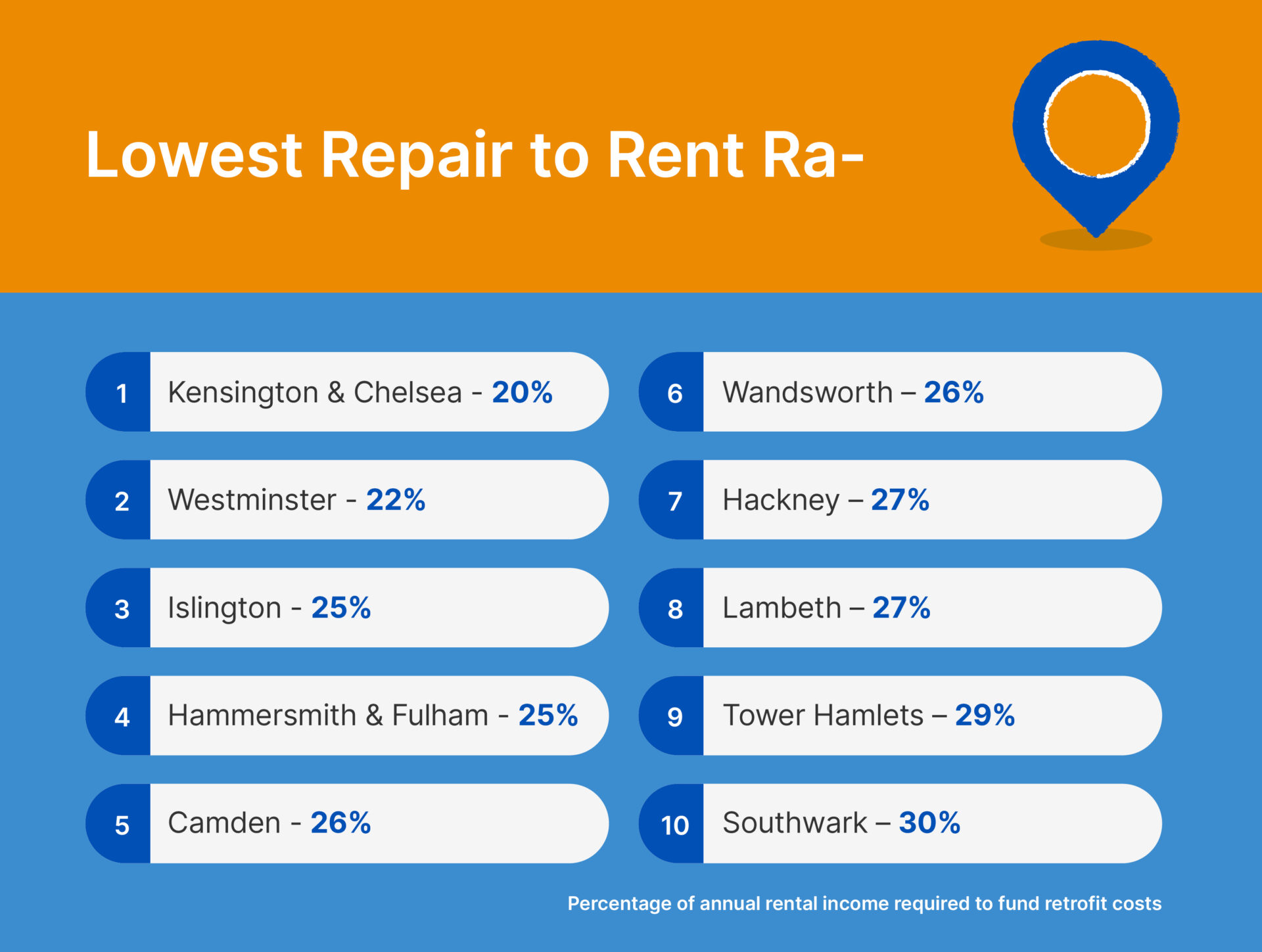
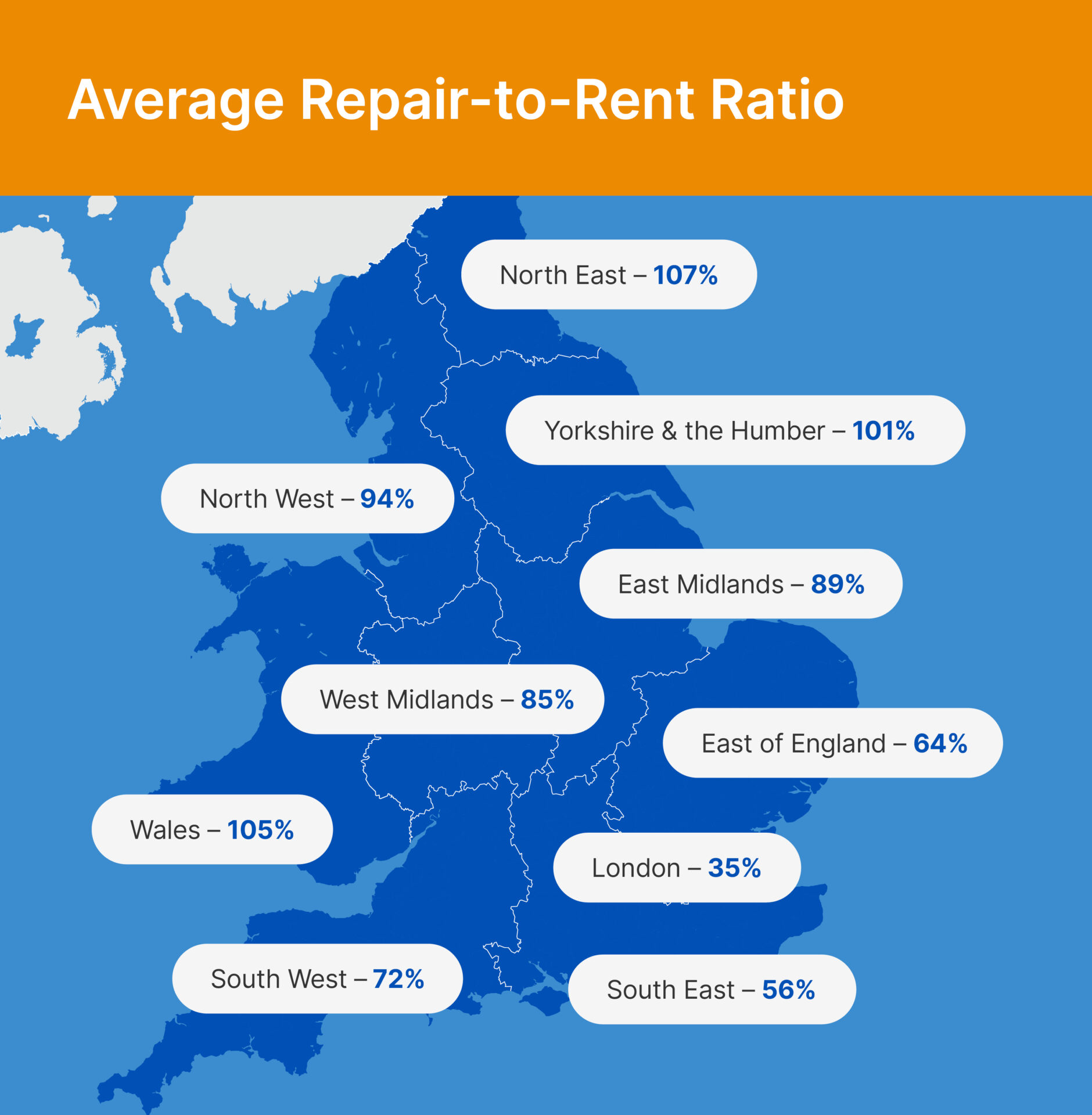
The average repair-to-rent ratio across London is just 35%, while the average figure for the North East sits at 107%.
Compliance levels differ considerably across the country
The majority of the most compliant regions can be found in major cities and urban areas.
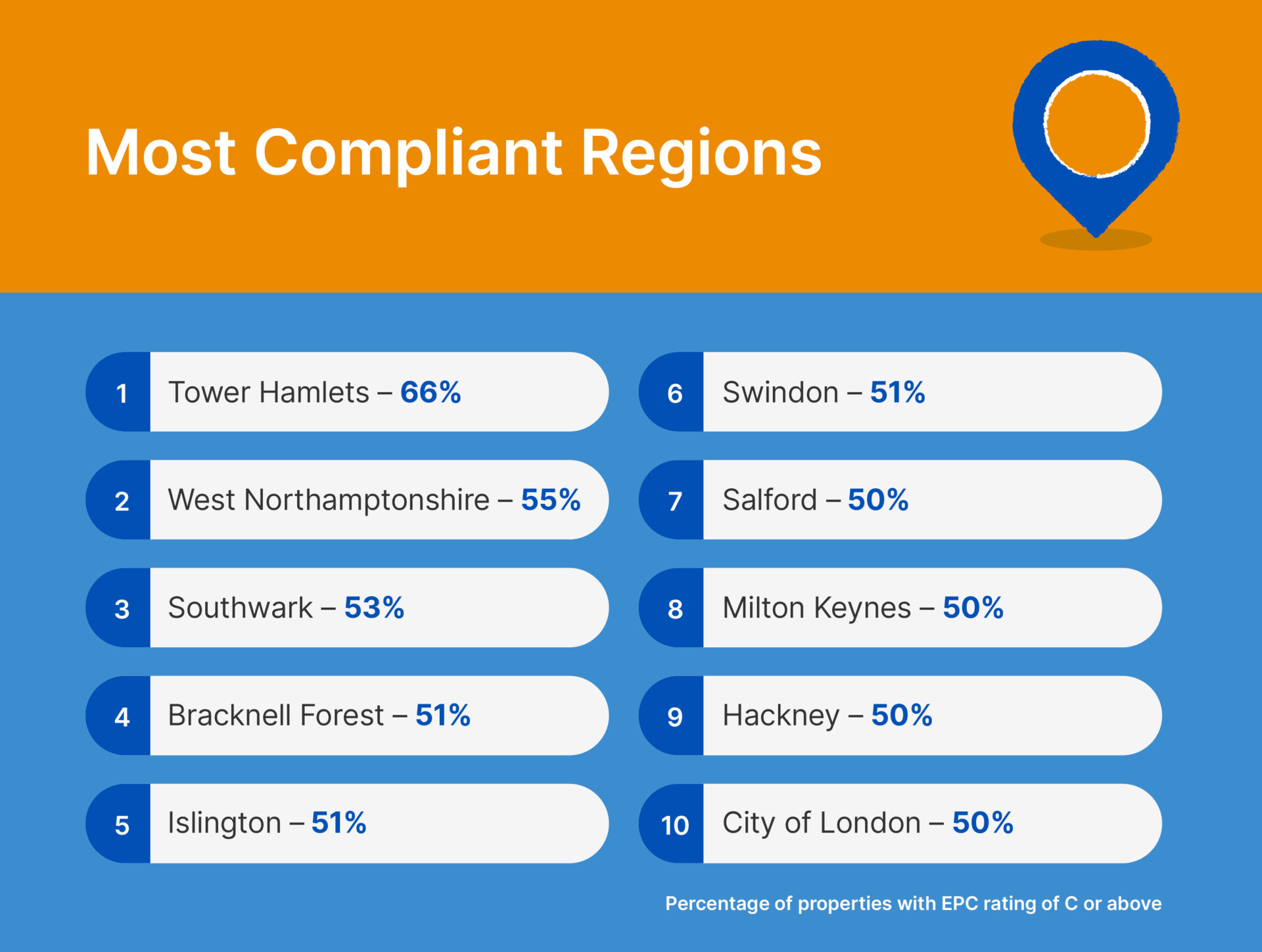
Meanwhile in more rural and coastal areas, the vast majority of homes require immediate investment.
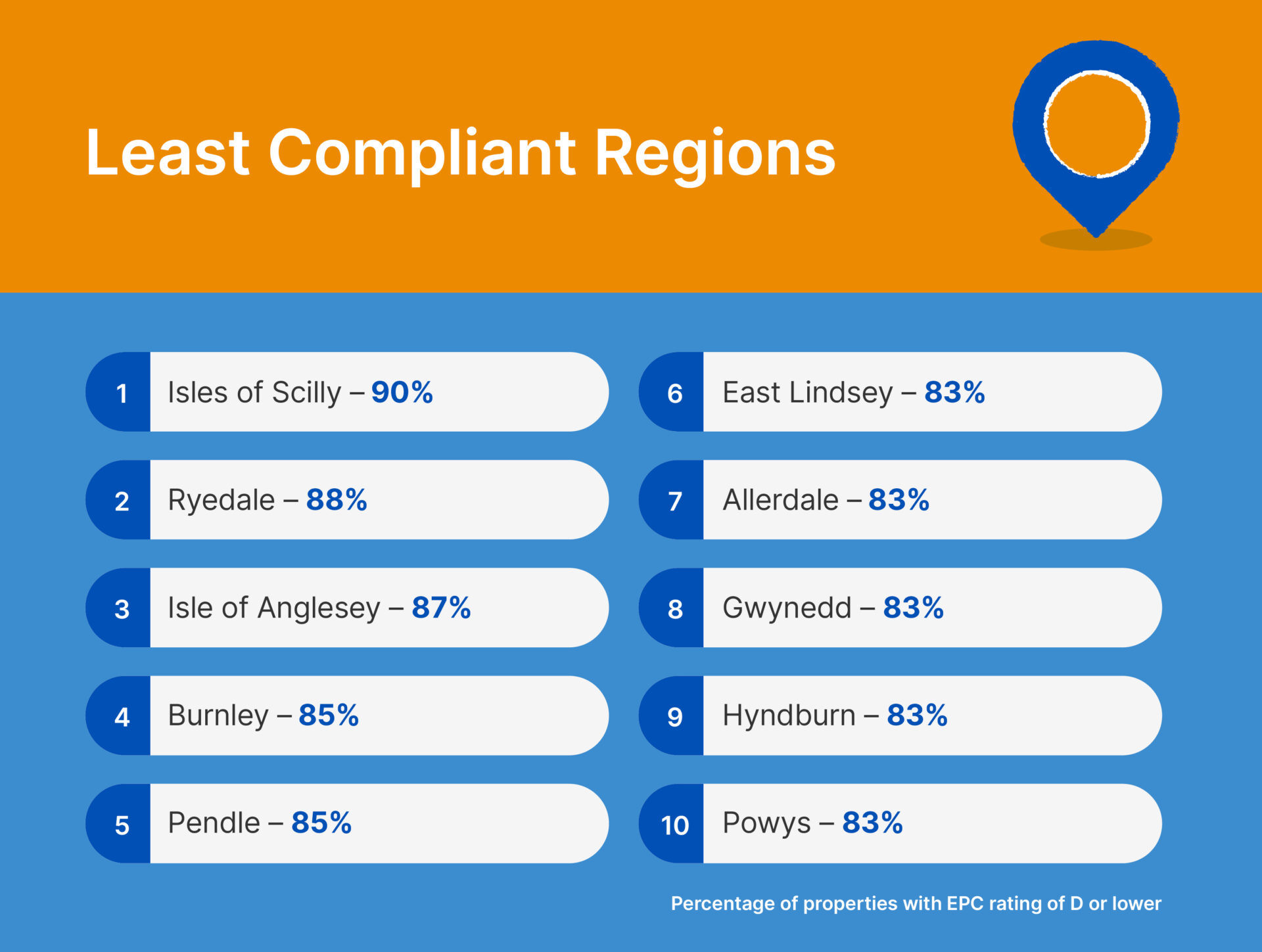
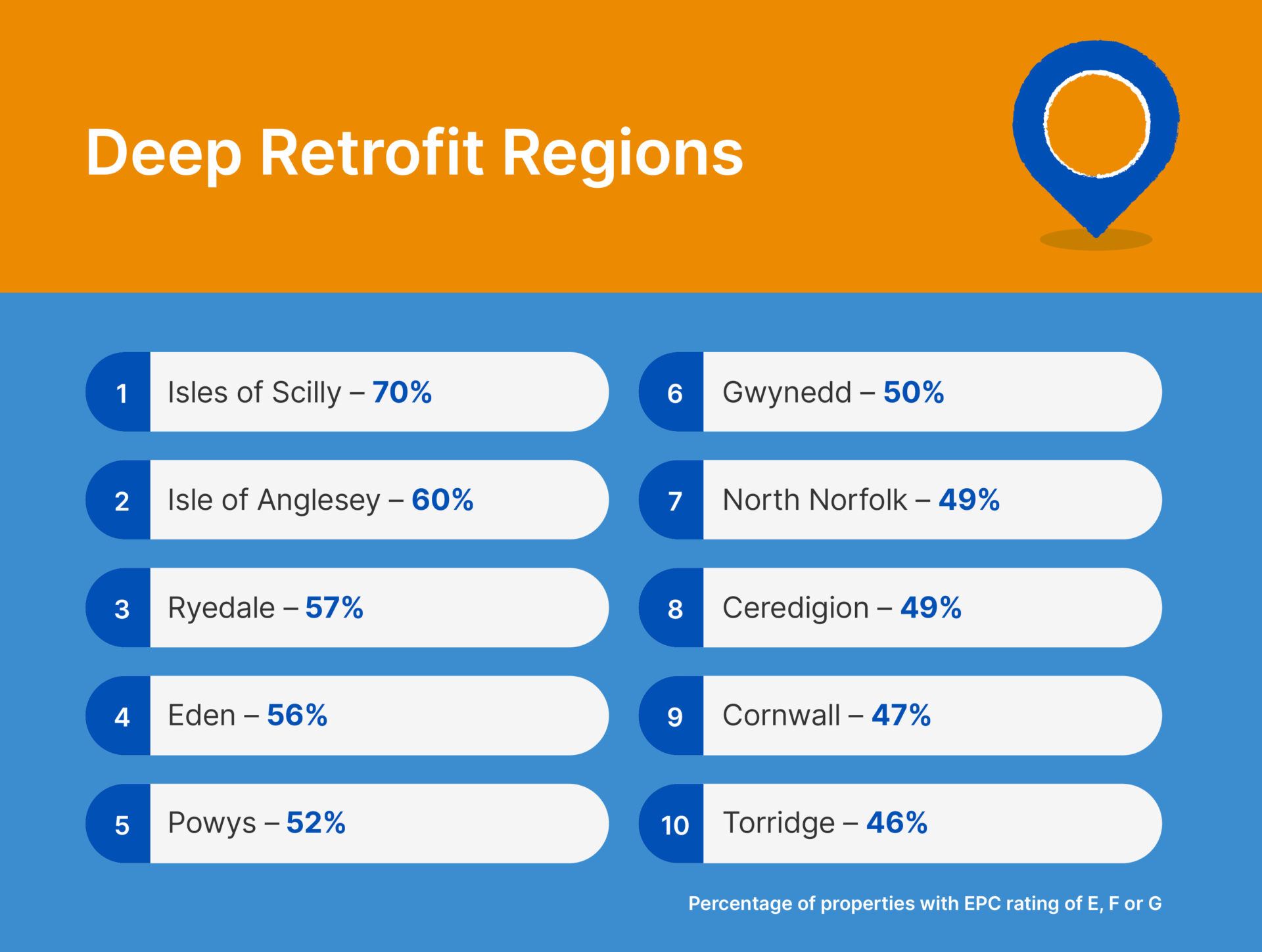
As well as reporting higher levels of non-compliance, many of these regions also represent the highest physical risk, with over half of properties currently having EPC ratings of E, F or G. These ‘deep retrofit’ areas require major structural interventions, such as solid wall insultation and heat pumps.
Find suitable protection for your property
There are various risks associated with letting a residential home. Help keep your investment safe, whether it’s a single property or a portfolio. Our comprehensive Landlord Insurance can help protect you from financial risks, including accidental and malicious damage by tenants and loss of rent if the property becomes uninhabitable due to an insured event.